
JavaScript is required

英文论文润色指南:如何利用AI消除“中式英语”并搞定苛刻审稿人?

104
2026-01-07 14:47:10

在国际会议或期刊的审稿意见中,最让中国学者(尤其是非英语母语者)头疼的往往不是实验数据,而是这句话:

"The English of this manuscript needs to be improved by a native speaker." (稿件的英文需要由母语人士改进。)

语言问题虽然不是致命伤,但它会严重影响审稿人的阅读体验,导致他们怀疑你的专业度,甚至因为看不懂而直接拒稿。

2026年,我们不需要花大价钱找老外,用好手中的工具,一样能写出地道的 Academic English

第一阶段:AI 辅助自助润色 (免费/低成本)

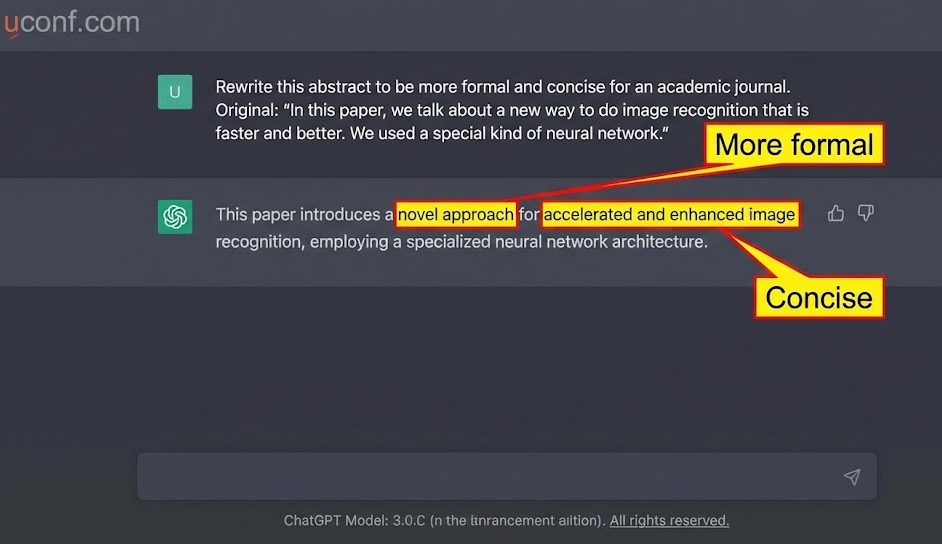
现在的 AI(如 ChatGPT, Claude, Grammarly)已经进化成了顶级的语法教练。关键在于你会不会提问 (Prompting)

1. ChatGPT / Claude 定向润色法

不要只发一句 "Polish this"。试试以下专业指令:

指令 (Prompt): "I am writing an academic paper for an IEEE conference about [Your Topic]. Please act as a professional academic editor.

  1. Correct any grammatical errors.
  2. Improve the sentence structure to make it more formal and concise.
  3. Replace simple words with more academic vocabulary (e.g., change 'use' to 'utilize' or 'leverage' where appropriate).
  4. Keep the original meaning unchanged. Here is the text: [Paste your abstract or paragraph]"

2. Grammarly / Quillbot 纠错与改写

  • Grammarly: 它是守门员。写完一段话,先丢进去查拼写和基础语法。不要忽视它的红色波浪线。
  • Quillbot: 它是美容师。如果你觉得某句话太啰嗦,或者重复率太高,用 Quillbot "Formal" "Shorten" 模式进行重写。

第二阶段:拒绝中式英语” (No Chinglish)

很多时候,AI 改不掉的是你的**“中式逻辑”**。以下是 3 个最典型的 Chinlish 陷阱,请自查:

1. 滥用悬垂修饰 (Dangling Modifiers)

  • Chinglish: "By using this method, the accuracy was improved." (谁用的方法?accuracy 自己不能用方法。)
  • Academic: "Using this method, we improved the accuracy." "The accuracy was improved by using this method."

2. 简单词汇堆砌 (Weak Vocabulary)

学术写作讲究精准 (Precision)

  • "Get" -> Obtain / Acquire
  • "Use" -> Employ / Utilize / Adopt
  • "Show" -> Demonstrate / Illustrate / Reveal
  • "Big" -> Substantial / Significant

3. 句子结构太碎 (Choppy Sentences)

中文习惯短句,英文习惯长句(从句)。

  • Chinglish: "We proposed a model. The model is fast. It achieves 90% accuracy."
  • Academic: "We proposed a fast model that achieves 90% accuracy."

第三阶段:借力神器” —— Academic Phrasebank

不要自己瞎编句型!英国曼彻斯特大学整理了一个 Academic Phrasebank (学术用语库),它总结了论文各个部分的万能模板

  • 当你想引入背景时
    • "Recent developments in [field] have heightened the need for..."
  • 当你想描述图表时
    • "As shown in Fig. 1, there is a clear trend of..."
  • 当你想对比结果时
    • "Contrary to expectations, this study did not find a significant difference between..."

建议:把这些句型打印出来,贴在电脑旁边,写论文时直接套用。

第四阶段:什么时候需要找人工润色

虽然 AI 很强,但在以下两种情况,建议付费找专业的人工润色服务(如 Elsevier Author Services, AJE 等):

  1. 投顶刊/顶会 (Top Tier):如 Nature 子刊、CVPRIEEE Transactions。这些地方的审稿人对语言极其挑剔,AI 机器味可能会被识别。
  2. 被审稿人点名批评后:如果二审意见里明确要求 "Professional editing certificate"(润色证明),为了稳妥起见,最好花钱买个证明。

总结:润色流程图

  1. 初稿 (Draft):自己写,不要怕语法错,先由着逻辑写。
  2. AI 清洗 (AI Clean):用 Grammarly 扫除低级错误,用 ChatGPT 润色段落流畅度。
  3. 人工/互查 (Peer Check):找师兄师姐或英语好的同行读一遍,检查逻辑是否通顺。
  4. 最终定稿 (Final):再次检查图表标题、参考文献格式。

在国际会议或期刊的审稿意见中,最让中国学者(尤其是非英语母语者)头疼的往往不是实验数据,而是这句话:

"The English of this manuscript needs to be improved by a native speaker." (稿件的英文需要由母语人士改进。)

语言问题虽然不是致命伤,但它会严重影响审稿人的阅读体验,导致他们怀疑你的专业度,甚至因为看不懂而直接拒稿。

2026年,我们不需要花大价钱找老外,用好手中的工具,一样能写出地道的 Academic English

第一阶段:AI 辅助自助润色 (免费/低成本)

现在的 AI(如 ChatGPT, Claude, Grammarly)已经进化成了顶级的语法教练。关键在于你会不会提问 (Prompting)

1. ChatGPT / Claude 定向润色法

不要只发一句 "Polish this"。试试以下专业指令:

指令 (Prompt): "I am writing an academic paper for an IEEE conference about [Your Topic]. Please act as a professional academic editor.

  1. Correct any grammatical errors.
  2. Improve the sentence structure to make it more formal and concise.
  3. Replace simple words with more academic vocabulary (e.g., change 'use' to 'utilize' or 'leverage' where appropriate).
  4. Keep the original meaning unchanged. Here is the text: [Paste your abstract or paragraph]"

2. Grammarly / Quillbot 纠错与改写

  • Grammarly: 它是守门员。写完一段话,先丢进去查拼写和基础语法。不要忽视它的红色波浪线。
  • Quillbot: 它是美容师。如果你觉得某句话太啰嗦,或者重复率太高,用 Quillbot "Formal" "Shorten" 模式进行重写。

第二阶段:拒绝中式英语” (No Chinglish)

很多时候,AI 改不掉的是你的**“中式逻辑”**。以下是 3 个最典型的 Chinlish 陷阱,请自查:

1. 滥用悬垂修饰 (Dangling Modifiers)

  • Chinglish: "By using this method, the accuracy was improved." (谁用的方法?accuracy 自己不能用方法。)
  • Academic: "Using this method, we improved the accuracy." "The accuracy was improved by using this method."

2. 简单词汇堆砌 (Weak Vocabulary)

学术写作讲究精准 (Precision)

  • "Get" -> Obtain / Acquire
  • "Use" -> Employ / Utilize / Adopt
  • "Show" -> Demonstrate / Illustrate / Reveal
  • "Big" -> Substantial / Significant

3. 句子结构太碎 (Choppy Sentences)

中文习惯短句,英文习惯长句(从句)。

  • Chinglish: "We proposed a model. The model is fast. It achieves 90% accuracy."
  • Academic: "We proposed a fast model that achieves 90% accuracy."

第三阶段:借力神器” —— Academic Phrasebank

不要自己瞎编句型!英国曼彻斯特大学整理了一个 Academic Phrasebank (学术用语库),它总结了论文各个部分的万能模板

  • 当你想引入背景时
    • "Recent developments in [field] have heightened the need for..."
  • 当你想描述图表时
    • "As shown in Fig. 1, there is a clear trend of..."
  • 当你想对比结果时
    • "Contrary to expectations, this study did not find a significant difference between..."

建议:把这些句型打印出来,贴在电脑旁边,写论文时直接套用。

第四阶段:什么时候需要找人工润色

虽然 AI 很强,但在以下两种情况,建议付费找专业的人工润色服务(如 Elsevier Author Services, AJE 等):

  1. 投顶刊/顶会 (Top Tier):如 Nature 子刊、CVPRIEEE Transactions。这些地方的审稿人对语言极其挑剔,AI 机器味可能会被识别。
  2. 被审稿人点名批评后:如果二审意见里明确要求 "Professional editing certificate"(润色证明),为了稳妥起见,最好花钱买个证明。

总结:润色流程图

  1. 初稿 (Draft):自己写,不要怕语法错,先由着逻辑写。
  2. AI 清洗 (AI Clean):用 Grammarly 扫除低级错误,用 ChatGPT 润色段落流畅度。
  3. 人工/互查 (Peer Check):找师兄师姐或英语好的同行读一遍,检查逻辑是否通顺。
  4. 最终定稿 (Final):再次检查图表标题、参考文献格式。